
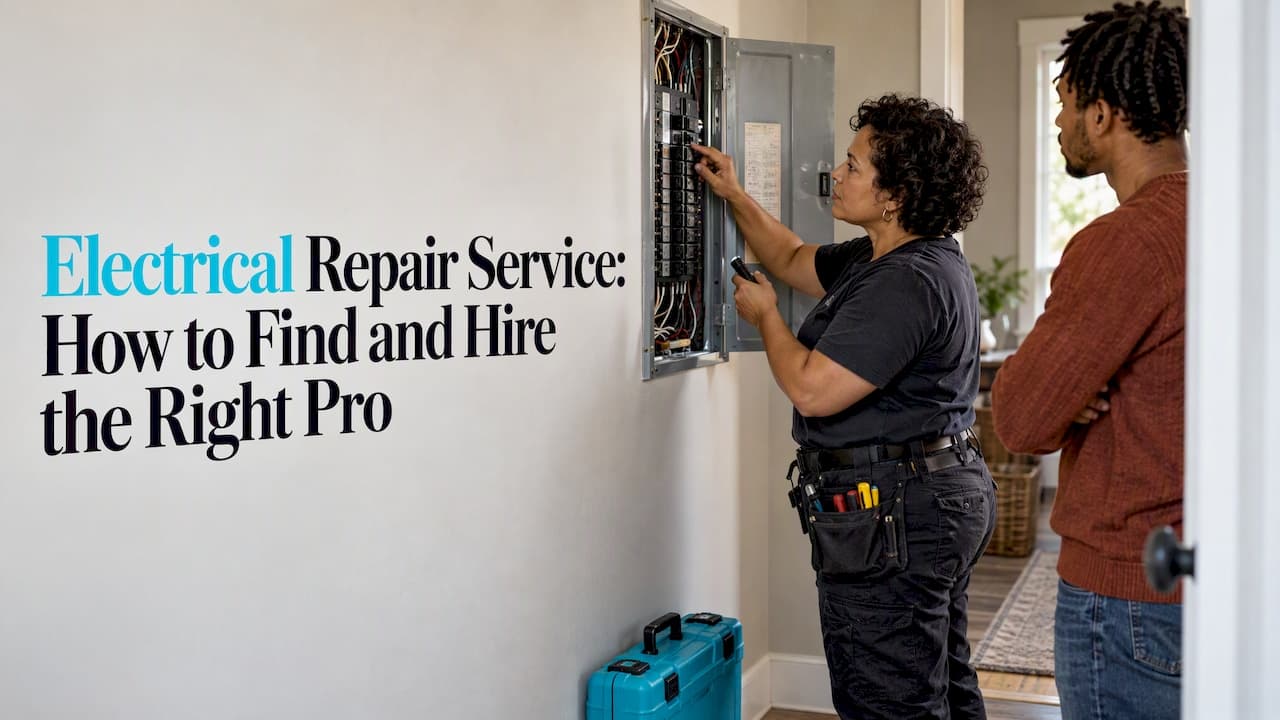
An electrical repair service sends a qualified electrician to find and fix problems in your home's wiring, outlets, switches, circuits and panel. Federal safety guidance is clear that this is work for professionals, not a weekend project. The best way to hire one is to know the warning signs, ask a few specific vetting questions, and compare written estimates for the same scope of work. This guide walks you through all three.
TL;DR
- Flickering lights, warm or discolored outlets, burning smells, sparks and breakers that keep tripping all call for a qualified electrician, or your landlord if you rent.
- Locating defects and repairing wiring is professional work. Federal safety guidance says so directly.
- Before you hire, check experience, current insurance, licensing and permit arrangements, and give every bidder the same written scope.
- Water near electrical equipment is an emergency: stay out of standing water and have an electrician cut the power.
- On SkillSwap you can post a request and compare verified local professionals with live trust scores and authentic reviews.
Table of Contents
- What an electrical repair service actually fixes
- Warning signs that mean you should call now
- What you can safely check yourself, and what to leave alone
- What happens during a repair visit
- Who fixes electrical problems, and what licensing to look for
- How to choose a local electrician: a checklist
- If you rent
- Perspective: why we built hiring around trust
- Find a verified pro on SkillSwap
- Avoiding the common mistakes
- A simple plan for your next electrical problem
- For electricians and other providers
- FAQ
- Sources
What an electrical repair service actually fixes
The U.S. Consumer Product Safety Commission (CPSC) guide to home wiring hazards covers the parts of a house that most often go wrong: wiring, service panels, circuits, outlets, switches, cords, and ground-fault and arc-fault protection (GFCIs and AFCIs). Those are the same categories a repair visit deals with.
In plain terms, a typical call falls into one of these buckets:
- Outlets and switches that are dead, loose, warm, buzzing or sparking.
- Breakers and fuses that trip or blow again and again.
- Lighting that flickers or dims when something else turns on.
- Protection devices, such as GFCI outlets near sinks or AFCI breakers, that trip, fail a test or are missing where they should be.
- Panel concerns, like a hot panel, burning odor or a panel that is crowded or outdated.
- Damaged or worn wiring, including cracked insulation and loose connections.
The CPSC is explicit that its guide is not a repair manual. Its purpose is to help residents spot potential dangers, while finding the defects and repairing defective systems belongs to qualified electrical professionals.
Warning signs that mean you should call now
You do not need to understand wiring to notice that something is off. Two independent safety sources list nearly the same signs. The National Fire Protection Association (NFPA) electrical safety checklist tells residents to call a qualified electrician or their landlord for any of these:
- Fuses that blow or breakers that trip frequently
- A tingling feeling from an appliance
- Discolored or warm outlets
- A burning or rubbery smell coming from an appliance
- Flickering or dimming lights
- Sparks from an outlet
The CPSC adds a few more signs: unusual sizzling or buzzing, overheated or discolored components, loose plugs, damaged insulation, and any electrical shock or tingle.
Smells and flickering lights
UL Solutions explains that flickering or dimming can happen when high-load appliances share a circuit. Its suggested fix is to talk with an electrician about moving lights to separate circuits or adding dedicated lines. That is a good example of a job where the right answer is a small design change, not just a new bulb.
The same page says an unusual odor from an outlet means you should unplug connected equipment, stop using the outlet and have a qualified electrician inspect it. A smell coming from a fuse box or breaker panel is a reason to call an electrician right away. Treat a persistent burning smell as urgent, not as something to watch for a week.
Water and electricity
If electrical equipment or circuits are wet or near water, the CDC says to stay out of standing water to reach the main switch. Call an electrician to turn off the power, and do not restore it until the equipment has been inspected and is dry. For an electric shock injury, the same guidance says to call emergency services.
What you can safely check yourself, and what to leave alone
There is a short list of low-risk habits that help. NFPA says to look over cords for damaged, cracked or loose wires, and to keep cords out of doorways and from under carpets. The same checklist says a damaged cord should go to a professional repair shop, be handled by an electrician, or be replaced.

The CPSC home electrical safety checklist recommends inspecting electrical products every six months. It also notes that outlets or switches that do not work properly may point to unsafe wiring, arcing, overheating or fire hazards.
A few other limits are worth knowing:
- Do not open the service panel. The CPSC advises residents not to remove the panel cover. Panel inspection belongs to a qualified electrician or licensed electrical inspector.
- Do not live on extension cords. UL says they should be used sparingly and temporarily. If you consistently need more outlets, have an electrician install them.
- Do not treat a tripping breaker as a nuisance. The Better Business Bureau (BBB) says that a broken breaker, flickering lights or nonworking outlets generally call for an expert, because electrical work requires specialized knowledge, tools and training.
What happens during a repair visit
The scope varies by problem, but the pattern is consistent. A qualified professional assesses the symptom, traces it to a cause, and carries out the repair. The CPSC recommends prompt repair when a professional identifies dangerous defects, and says the electrician should check for additional wiring problems at the same time.
That second point matters. A dead outlet is often the visible end of a bigger issue, such as a loose connection upstream. A good electrician will not only swap the outlet. They will tell you what they found, what is urgent and what can wait.
Here is a practical way to think about it.
| Symptom | What it may point to | Your next step |
|---|---|---|
| Outlet warm or discolored | Overheating or a poor connection | Stop using it and call an electrician or landlord |
| Breaker trips repeatedly | Overloaded or faulty circuit | Unplug devices, then call a pro if it returns |
| Lights dim when an appliance starts | Heavy loads sharing a circuit | Ask about separate or dedicated circuits |
| Burning smell at an outlet | Possible failing connection | Unplug equipment, stop use, call an electrician |
| Burning smell at the panel | Possible panel fault | Call an electrician right away |
| Wet outlets or equipment | Shock hazard | Stay out of water, have power shut off by a pro |
The table is a guide to urgency, not a diagnosis. Only an electrician on site can say what is actually wrong.
Who fixes electrical problems, and what licensing to look for
The short answer is an electrician. The BBB describes two common levels. A journeyman works according to a master electrician's plans and directions. A master electrician has two additional years of training and can design wiring, supervise journeymen and work independently.
Licensing rules differ by state, and often by city or county, so check your own state's licensing board. Washington State offers a clear example. Its Department of Labor & Industries advises homeowners with wiring problems or broken fixtures to hire an experienced, licensed electrical contractor. It says employees working in the home must be licensed electricians. It also explains that a licensed contractor helps ensure work is done to code, permitted and inspected as required, and warns that non-permitted or uninspected work may jeopardize insurance coverage after a fire.
That last point is the one people overlook. Cheap, unpermitted work can cost you far more if something goes wrong later. Treat your state's rules as the standard and look them up before you book.
How to choose a local electrician: a checklist
The BBB's hiring advice boils down to four things to check: relevant experience, materials, current insurance and permit arrangements. It also recommends giving every bidder the same detailed project requirements, so the estimates you get cover the same work and can be compared fairly.
Use this list before you say yes:
- Ask for the license number and confirm it with your state licensing board.
- Ask for proof of current insurance. Do not rely on a verbal yes.
- Ask who pulls the permit if the job needs one, and who schedules the inspection.
- Write down the scope. List the symptoms, locations and anything you have already noticed, then send the identical text to each bidder.
- Compare line items, not just totals: labor, materials, trip charges and what happens if the electrician finds a second problem.
- Read reviews for patterns. One bad review means little. Five describing the same no-show or surprise charge mean a lot.
- Confirm timing. Ask how soon they can come out, and whether the quote is firm or an estimate.
Writing a scope that gets comparable quotes
Vague requests produce vague quotes. Compare these two:
- Weak: "Outlets not working, need electrician."
- Strong: "Two kitchen countertop outlets stopped working after a breaker tripped last week. The breaker resets but trips again within minutes when the toaster is on. Outlets feel slightly warm. Single-family home, owner-occupied. Please quote diagnosis and repair, and tell me if a permit is needed."
The second version tells a pro what to bring, how urgent it is and what you expect in the quote. It also makes it easy to see when one bidder skipped part of the job.
If you rent
If you rent, your first call may belong to the property owner. NFPA's guidance for the warning signs above is to contact a qualified electrician or your landlord. Report the problem in writing, with a date, a description and a photo if you can safely take one. If anything involves burning smells, sparks or heat, say it is urgent, and stop using the affected outlet in the meantime.
Do not attempt your own fix to speed things up. Beyond the safety risk, unauthorized electrical work can create trouble with your lease.
Perspective: why we built hiring around trust
We started SkillSwap because finding a trustworthy local professional is harder than it should be. The usual routes, a search page full of ads or a name from a friend of a friend, leave you guessing about who is actually showing up at your door.
With home repair work, the stakes are real. Our approach is to put the proof in front of you before you book: identity verification, background checks, authentic reviews from previous users, and a live trust score for every provider. We think a score you can see is worth more than a promise you have to take on faith.
We also think price should be fair and visible. Our Dynamic Pricing Engine™ is designed to adjust costs based on real-time market data, so clients see pricing that reflects the market and providers can price their work sensibly. For electrical and other home repair needs, we encourage you to confirm licensing and insurance with the pro you choose, using the checklist above, and to keep your payment and your conversation on the platform.
The goal is simple: you describe the job once, compare verified people, and hire with confidence.
Giannis
Find a verified pro on SkillSwap
SkillSwap is an online marketplace that connects individuals and businesses with verified local professionals, with home repair among the categories we cover. Every provider goes through identity and background verification, and you can see authentic reviews and a live trust score before you book. Payments are handled securely through the platform.

Ready to get started? Post a service request with the detailed scope you wrote above. If you want to see how the process works first, read how SkillSwap works, or look at how our provider trust score is presented.
Avoiding the common mistakes
Waiting on a warning sign. Flickering, warm outlets and repeat tripping rarely fix themselves. The CPSC and NFPA both treat them as reasons to call a professional.
Hiring on price alone. The BBB's advice to compare like for like exists because a low number can hide a smaller scope. Make sure each quote lists the same tasks.
Skipping the permit conversation. Per Washington L&I, uninspected work can put your insurance coverage at risk after a fire. Ask early who handles permits, and check what your local rules require.
Buying a home or remodeling without an inspection. NFPA recommends that all electrical work be done by a qualified electrician and that homes be inspected by a qualified private inspector or according to local requirements when you buy or remodel. If an inspector flags something, that is your repair list.
Restoring power too soon after water. If equipment got wet, wait for a professional inspection, as the CDC advises.
A simple plan for your next electrical problem
- Make it safe. Unplug what is involved, stop using the affected outlet or circuit, and stay away from water and the panel.
- Note what you see. Where, when, what you smelled or heard, and which breaker, if any, tripped.
- Decide who to call. Renters start with the landlord. Owners hire a licensed electrician. For shocks or fire, call emergency services.
- Write one scope and send it to a few verified professionals.
- Compare quotes on scope, insurance, permits and timing, plus reviews and trust scores.
- Ask the electrician to look for related problems while on site, as the CPSC recommends.
- Keep the paperwork: invoice, permit and inspection record if any.
For electricians and other providers
If you do repair work and want steady local jobs, SkillSwap is built for you as well. Your verification, reviews and trust score travel with your profile, so good work becomes visible to the next client. You can learn more about how earnings work for providers and how our pricing intelligence is meant to help you price jobs in line with the market.
FAQ
What kind of worker fixes electrical problems?
An electrician does. Journeyman electricians work from a master electrician's plans, and master electricians can design wiring, supervise others and work independently, according to the BBB. Many states require a license, so confirm credentials with your state's licensing board before you hire.
What does an electrician repair in a home?
Electricians handle home wiring, service panels, circuits, outlets, switches, cords and protection devices such as GFCIs and AFCIs, the same categories the CPSC covers in its wiring hazards guide. A good electrician also checks for related wiring problems while on site.
Can I repair an outlet or breaker myself?
Federal guidance points the other way. The CPSC says its guide is not a repair manual and that locating defects and repairing systems should be left to qualified electrical professionals. It also says not to remove the service panel cover. You can safely check cords for damage and keep them out of doorways and from under carpets.
When is an electrical problem an emergency?
Treat sparks, a burning smell, a hot or discolored outlet, a shock or tingle, or any water near electrical equipment as urgent. Stop using the affected item, stay out of standing water, and call an electrician. For a shock injury, call emergency services.
How do I compare electricians fairly?
Give each one the same written description of the job, then compare quotes line by line. Check experience, current insurance, licensing and who handles the permit, as the BBB recommends. Reviews and verified credentials on a marketplace help you narrow the list quickly.
Sources
- CPSC Guide to Home Wiring Hazards
- CPSC Home Electrical Safety Checklist
- NFPA Electrical Safety Checklist
- NFPA Electrical Home Fire Safety
- UL Solutions: 8 Signs You May Have a Problem with Your Electrical Wiring
- CDC: What to Do to Protect Yourself From Electrical Hazards
- BBB Tip: Hiring an Electrician
- Washington L&I: Protect My Home